
If you live in Pune or Mumbai and care about what your family drinks every morning, you've probably stood in a supermarket aisle (or scrolled an app) wondering which milk to choose. There are dozens of brands, multiple categories, and surprisingly little plain-English guidance on what actually makes one different from another.
This guide skips brand names on purpose. Instead, it walks through the categories of milk available in Pune and Mumbai, what each category is optimized for, and the questions worth asking before you commit to a daily subscription. We'll also be transparent about where Doodh & Co sits in this landscape. We're a single-origin, farm-direct brand, and we'll explain what that means without dressing up the trade-offs.
Use this as a framework. Once you know which category fits your household, comparing specific brands in that category becomes much easier.
What Actually Differs Between Milk Brands
Most people pick milk by familiarity or price. The variables that drive real quality are usually invisible on the carton. Here are the five that matter:
Source model: Is the milk from one farm, a regional cooperative pooling output from many farmers, or a national network spanning multiple states? Pooled sources average out quality, and they also average out problems.
Handling: How many times does the milk pass through human hands between cow and pack? Each touchpoint is a potential source of contamination or, in worst cases, adulteration.
Time from cow to doorstep: Milk that reaches you within 24 hours tastes different from milk that has spent a week in the cold chain. Fresher milk also carries lower bacterial load. Pasteurization helps, but it doesn't fully compensate for time.
Adulteration risk: FSSAI surveys have repeatedly documented adulteration in Indian milk samples: water, detergent, urea, synthetic milk. Brands with shorter, more transparent supply chains are structurally less prone to these issues.
Breed and "A2" claims: A2 milk refers to milk containing only the A2 beta-casein protein. Research on its digestibility is ongoing and inconclusive. Most A2 marketing in India is based on cow breed (desi cow) rather than per-batch lab testing. Treat these claims as marketing categories unless the brand publishes verifiable test data.
Category 1: National Cooperative Brands
These are the household names you'll find at every kirana store and supermarket across India, including Pune and Mumbai. They are cooperatives: milk is collected from hundreds of thousands or millions of farmers, pooled at processing centres, standardised, and distributed nationally.
What they're optimized for
Scale, availability, price stability, and consistent standardised quality. You can find them anywhere, anytime, at predictable prices. Their range typically spans every segment: toned, full-cream, double-toned, organic variants, and value-added products.
Trade-offs to know
Because milk is pooled from a vast network of farmers across one or more states, individual-farm visibility is essentially zero. The supply chain is long; milk often travels significant distances and sits in cold storage for several days before reaching retail. Freshness varies by store and channel.
Best for
Households that value reliability, availability, and price over freshness or traceability. If the milk has to be available every time you visit the store, this category is the safest bet.
Category 2: Regional & State Cooperative Brands
One step smaller in scale than the national cooperatives, these are state or district-level cooperatives that source from farmers within a defined geographic region. In Pune and Mumbai, you'll find several such brands serving the western Maharashtra catchment.
What they're optimized for
Local sourcing, value-for-money pricing, and reasonable freshness owing to a shorter supply chain than national cooperatives. Many have decades of trust in their home regions.
Trade-offs to know
Still cooperative-style: milk is pooled from many farmers across the region. Quality is institutional rather than per-farm. Distribution may thin out outside the home state.
Best for
Households that want a regional, locally-rooted option at a reasonable daily price, and don't need single-farm traceability.
Category 3: Heritage & Legacy Regional Brands
In Pune especially, several long-established family-run brands have built generational trust. They typically pair milk with value-added dairy (paneer, ghee, sweets, mithai) and are deeply embedded in the local food culture.
What they're optimized for
Recognised, trusted local quality at scale; a wide range of dairy and dairy-derivative products; strong distribution within the home region.
Trade-offs to know
These brands typically source from a network of contracted farmers across a region, not from a single farm. The supply chain still involves multiple handling steps, and the milk is generally a few days old by the time it reaches retail.
Best for
Households that want a familiar, well-distributed daily milk paired with a deep range of regional dairy products.
Category 4: Single-Origin, Farm-Direct Brands
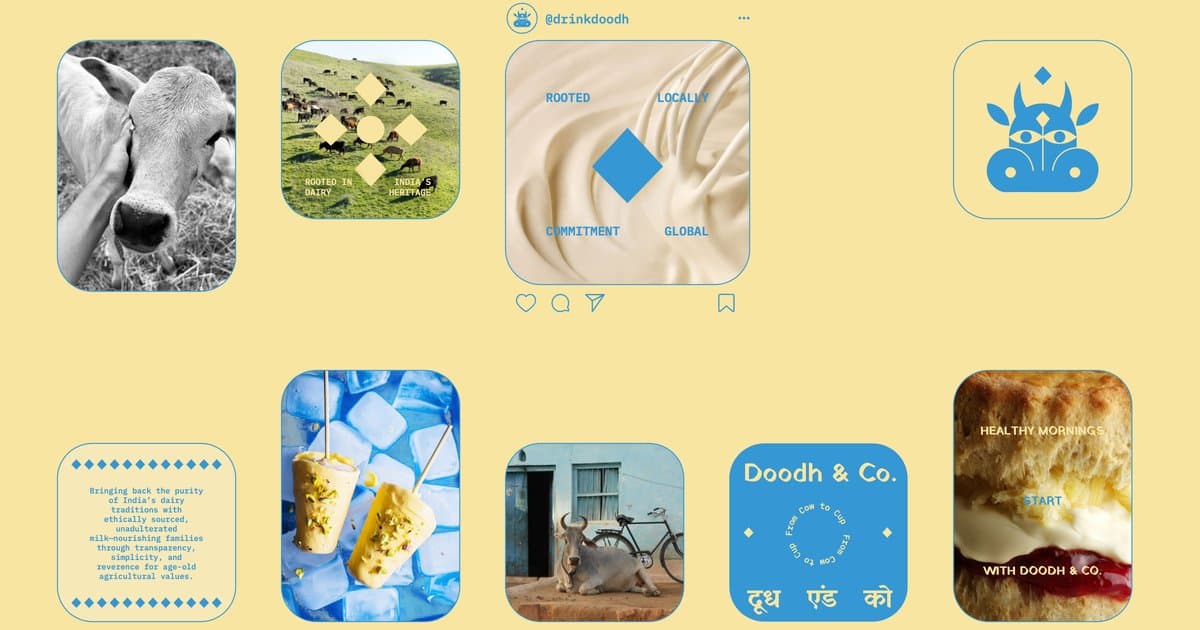
This is a newer category in India: brands that operate their own single farm, milk their own cows, pack their own milk, and deliver direct to the consumer. Doodh & Co is in this category, so we'll describe it from the inside.
What we're optimized for
Single-origin: every pouch comes from one farm. No pooling across many farmers.
Untouched handling: from cow to pouch, milk flows through sealed, automated systems. No human contact, which closes off the most common entry points for contamination and adulteration.
Tested every batch: our sealed, untouched process is built for a low bacterial load, and every batch is tested before it goes out.
24-hour freshness: milk reaches your doorstep within 24 hours of milking, delivered between 5 and 8 AM.
Traceability: every pouch carries a QR code linking to farm and batch data.
Trade-offs to know
Price: single-origin sourcing and automated handling cost more to operate. We are priced at a premium over national and regional cooperatives.
Availability: we currently deliver only in select Pune and Mumbai neighborhoods. If your locality isn't on our list yet, the waitlist is the way in.
Range: we focus on a tight set of products: milk, paneer, ghee, dahi. We don't make sweets or extensive value-added ranges.
Best for
Households that prioritise freshness, transparency, and structural protection against adulteration over scale and price. Particularly worth considering for families with young children, elderly members, or anyone who has reasons to care about per-farm supply chain visibility.
A Quick Way to Choose
If you want the short version:
- Maximum availability and price stability: national cooperative brands.
- Locally-rooted value: regional or state cooperatives.
- Familiar, trusted, paired with a wide dairy range: heritage regional brands.
- Freshness, traceability, and single-farm sourcing: single-origin, farm-direct brands like Doodh & Co.
None of these are wrong choices. They serve different households with different priorities. The "best" brand for you is the one whose trade-offs match what you actually value.
What to Look for, Regardless of Brand
Whichever brand you choose, a few checks help you make sure you're getting what you're paying for:
1. Check the smell and texture at delivery: clean dairy smell, no sourness, uniform texture.
2. Watch boiling behaviour: fresh, unadulterated milk simmers cleanly without unusual residues. Excessive separation can indicate handling issues.
3. Check the date: milk less than 24-48 hours old is fundamentally different from milk that's been in cold storage for a week.
4. Ask for source information: any brand should be able to tell you broadly where their milk comes from. Vague answers are a flag.
5. Try home purity tests occasionally: water test, iodine test, urea test. We've written a separate guide on those.
Conclusion
There's no objectively best milk in Pune or Mumbai, only honest trade-offs between availability, price, freshness, and traceability. The big cooperative and heritage brands have earned their place by serving households well at scale. Single-origin, farm-direct brands like Doodh & Co exist because a meaningful number of families want something different: milk from one farm, never handled by human hands, fresh enough that you can taste the difference.
If that's what you've been looking for, see our products page or our subscription bundles for daily delivery in Pune and Mumbai. If a different category fits your household better, that's a perfectly good outcome too. At least now you know what you're choosing between.